Find

Main | Find

Find

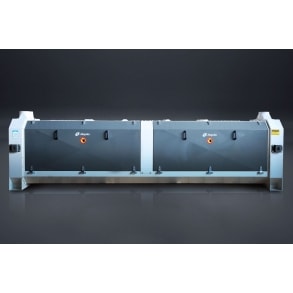
The machine is used to separate the round particles which are smaller than wheat kernels, broken wheat kernels, longer particles more than wheat kernels from wheat in grain cleaning, packing plants and flour mills.

Scope of Use

The machine is used to separate the round particles which are smaller than wheat kernels, broken wheat kernels, longer particles more than wheat kernels from wheat in grain cleaning, packing plants and flour mills.

Working Principle

The cylinder ports size are selected in accordance with scope of the process. The grain is regularly spreader on cylinder and during process the foreign particles and broken wheat are accommodated in the cylinder ports. The separation process is carried out by moving the trapped particles in cylinder ports from circumference to upward and drain into conveying screw conveyor. In case of necessary the separated foreign particles are conveyed to the control cylinders to separate the escaped wheat kernels during main process.

The machine consists of the main structures. The sturdy body erected with cylinders and drive motors and the cylinders which carry out the separation process. The main and control cylinders are selected per need as one or two pieces. The cylinders can be combined as multiplicity by taking into consideration separation process and capacity.

0.00 KZT

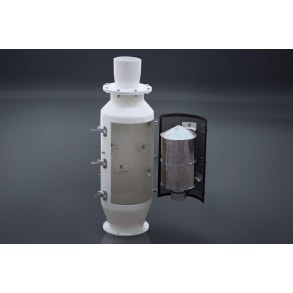
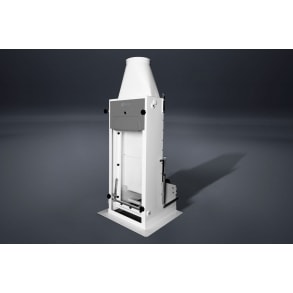
It is used to separate metallic particles from the product.

Working Principle

The product enters into a tubular shaped chamber from the inlet, and passes over a magnet. The magnet is opened periodically and metallic particles can be automatically discharged.

0.00 KZT

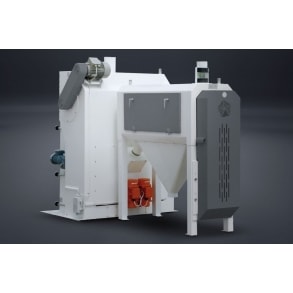
It eliminates the dust, the arista and beards from the kernels furthermore, it crumbles insects and detaches empty kernels and lumps of mud. An intensive friction and rubbing action between the kernels, the cover and the paddle type beaters will reduce the bacterial potential in the flour.

Structure

  • Electrically welded steel sheet structure
  • Statically balanced rotor with 8 rods duly screwed and provided with a set of paddle type beaters arranged in diagonal
  • Shaft fitted onto double row barrel roller bearings and supporting elements with internal labyrinth seals
  • Special sheet steel cover with triangular pocket shaped perforations
  • Large doors for easy maintenance operations of cover

Working Principle

  • The grain is intensively rubbed and pressed between the screen and itself by using a horizontal rotor. In the meantime the following processes occur because of intensive friction is generated:
  • The grain is pressed and rubbed against each other
  • The grain is pressed and rubbed by rotor- fitted wings
  • The grain is rubbed by an abrasive screen
  • The machine is driven by a belt-pulley combination and it can be used with any type of air canal and tarar.
0.00 KZT

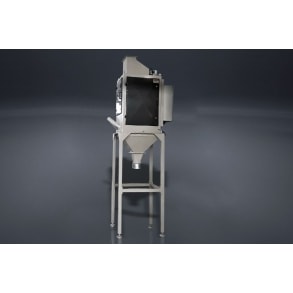
It is used in the grain processing plants to moisten the grain at a desired rate.

Structure

  • The machine is constructed of stainless steel, consisting of semi circular 25° inclined worm with Plexiglas cover
  • Rotor consisting of 600 mm screw and 1700 mm of variable pitch mixing paddles
  • Square section iron structure supporting the screw conveyor, water flow control equipment and motor
  • Manually operated valve for closing water circuit

Working Principle

The grain flow entering the casing agitates the water flow sensor; the water is sprayed into the grain and mixes with it. The blades push the grain mixed with water to the grain outlet. Capable of adding up to 5% water to cleaned wheat with even distribution of moisture. Avoids grains breakage, minimize the wear of rotor and prevents its unbalance thanks to limited operational speed. The water distribution to kernel is fast and uniform with thorough penetration and absorption.

0.00 KZT

Controls product inlet to hammer mill and avoids hammer mill blockage.On the rubber shock absorbers top prevent the vibration transmission to the foundation (floor)

Working Principle

The product is fed regularly into the hammer mill by means of a suitable feeder. The size of particles is reduced by means of a rotor with beaters, which catches the product. The beating process will go on until the particles are flung through the perforated sieve, which surrounds the rotor. Then the product is collected in a hopper.
The hammer mill can be directly installed above a silo so that the product can be directly discharged into the silo. In such case, the silo must be equipped with an aspiration system, at a minimum capacity of 10 cubic meters per minute. To protect the rotor and perforated sieve a powerful magnet ought to be erected before the hammer mill.

0.00 KZT

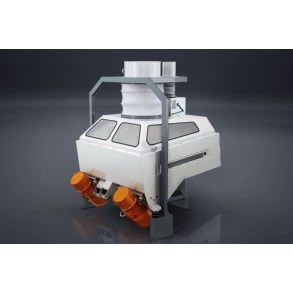
Machine designed for the removal of fine and coarse impurities from cereal caryopses by sifting action. Due to its adjustable speed and inclinable screen, it can be used as a multilateral grain-cleaning machine.

Inclination (angle) of screen adjustable - grades range 2 - 12. Due to such feature it can be used for any kind of cereals at maximum efficiency

Working Principle

Vibrating process is maintained by means of vibro-motors, which are placed in the center of gravity of the machine. The grain feeding chamber and body which are mounted on the rubber shock absorbers by vibrating together and driven by vibro-mo tors convey the product into mid-section of inlet. The grain is separated uniformly on the entire surface of the screen by means of an adjustable regulating gate. If it is necessary, for better product flow another adjustable regulating gate can be fixed to the inlet of the screen. When the grain passes through from the first screen to the second one, larger size impurities or foreign particles are kept by the first screen and directed to coarse offal discharge line. The remained smaller size impurities or foreign particles, which pass through the second screen, are transferred to fine offal discharge line. Then, the cleaned product is transported to an air canal or tarar.

Structure

Vibrating structure supported by elastic shock-absorbing elements, containing the sifting body with two rows of sieves pairs Self adjusting grain feed Self cleaning of the sieve covers by means of rubber balls Transparent plexiglass panels for checking the cereal strata Steel or wooden made sieve frames equipped with easily replaceable perforated plates The vibrator motors, which provides the oscillation for the separator

Features & Advantages


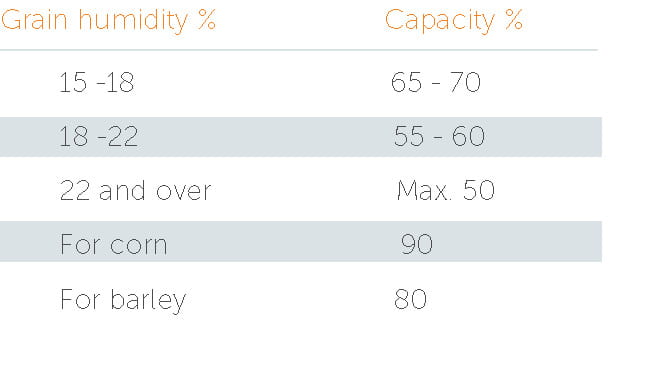
  • Note: All figures given on table are max.
  • Values to be considered for wheat and rye, which contain 15% humidity. For higher humidity containing grains below mentioned values should be considered.
0.00 KZT

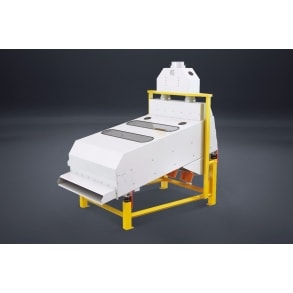
It is used to remove stones, mud balls, glass or metal pieces from cereals, leguminous seeds, shelled seeds and similar products.

Working Principle

  • The product flows through the feeding chamber onto a vibrating separating deck and is acted upon by vibration and air flow which causes the stones to travel up to deck to be discharged to the stone container whilst the cereals travel down to the deck to be discharged into the spout.
  • This operation is achieved easily due to oscillation difference; consequently the heavy particles and product are easily separated from each other.
  • An optimum operation is the result of several factors, such as:
  • Frequency and amplitude of vibrations
  • Suspension effect of the cereals caused by the airflow
  • Inclination of the processing deck

Note: The given values at the table are only for wheat. These values can change if processing other than wheat.

0.00 KZT

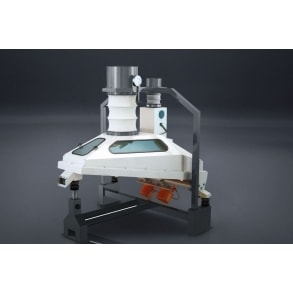
Combined machine for selecting of cereals into light and heavy fraction and for separating the heavy fraction from stones and other particles with high specific weight.

Structure

  • Alloy steel support structure suspended an elastic shock absorbing elements with adjustable inclination
  • Aluminium tubular frames clothed with spring-steel wire
  • Vacuum operation by means of micrometric aspiration adjustment
  • Inlet and outlet sleeve
  • Support plank for aspiration butterfly valve

Working Principle

The product, flows through the superior part of the machine and with the effect of the vibration and a particular distribution system, spread on superior frame divided in three parts with different sizes and perforations. During the deviation on the superior frame, on the effect of the combination airflow and frame vibration, the product becomes intense uniformly on all length of the frame. Stones and high specific weight product fraction are concentrated on the inferior part of the product layer; however, the suspended light fractions are evacuated beginning from the second part of the frame. The destoner treatment is done on the inferior frame, the effect of the vibration and the aspiration regularize the flow of the product until the stone were evacuated on the backside. The heavy cereal fraction, cleaned from the stones, is oriented on the opposite side.

Note: The given values at the table are only for wheat. These values can change if processing other than wheat.

0.00 KZT

Perfect cleaning and separation of light particles with precise adjustment It is used to eliminate light particles, foreign materials and dust from cereals and legumes minimum of air consumption.

0.00 KZT

It is designed to remove and clean all kinds of light impurities and foreign materials from cereals, coffee seeds, soybeans and corn and so on by means of air circulation.

Working Principle

After the grain is fed through the vibrating feeder it will be transferred to an air canal. The grain is separated uniformly on the surface of the air canal by means of the vibrating feeder. The light impurities are separated from grain by using air and eventually the impurities are discharged to offal conveying line. The air velocity can be adjusted by means of a gate, which is situated at the air the duct outlet. The subjected adjustment can be carried out in accordance with crop quality to be cleaned and the kind of impurities in the crop. By installing air canal (without vibro-motor) directly to the outlet of the TCSI separator the product and foreign materials are separated from each other.

0.00 KZT

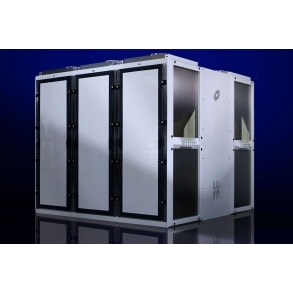
The Aurora is a new generation of Plansifter which is designed by using new and innovative concepts of using modules, which allow a total flexibility from 2 sections to 4, 6 and 8 sections to suit the specific requirements of its usage. By using a new manufacturing technique which allows fast delivery times to respect the customer’s demands. The Aurora has been designed to sift and grade granular and floury products in flour milling, maize (corn) milling, durum, rye and rice mills. It can also be applied for the sorting of free flowing and granular products.

Higher sifting efficiency with compactness

This innovative concept consists of the central oscillating drive mechanism to which there are two sections attached by means of 2 carrier arms. Starting from here any even number of sections can be attached limited to a maximum number of 8 sections and vice versa they can be removed. The oscillating drive system consists of a central shaft to which the counter weights, which are adjustable are attached. The top and bottom ends of the shaft are housed in double conical cylindrical bearings. The shaft is driven by a motor, special pulleys and Poly-V drive belts. The motor is mounted on to the main frame. The bearings have a special lubrication system and are easy to mount and dismantle. The Aurora is easy to install and in cases where there is a limitation of space it can be shipped in modules or sections which is ideal when there is a limited amount of space available. Several suspending options are available for different floor heights.

Efficient Sifting And Sanitation

Higher sieve loads are achieved by using the AURORA (G) frames and AURORA sieve fabric and sieve tray cleaners an extra 22% sifting area is achieved. The Alapala type G, N and S sieves can be used. Further more, a constant sifting capacity is achieved with the best through rates with minimum sieve cleaning and low easy maintenance. After the sieves have been placed in the section they are pressed and clamped by a special pressure clamping device which is independently adjustable from all four corners. High levels of sanitation are achieved due to the innovative way of construction of the AURORA where all parts in contact with product are made of stainless steel or food grade synthetic materials. Humidity is avoided by using special high grade insulation. The innovative way of construction stops the internal product build up in the dead areas thus preventing adour and the growth of mold, bacteria and insect infestation.

0.00 KZT

Perfection best describes the ARION purifier milling technology.

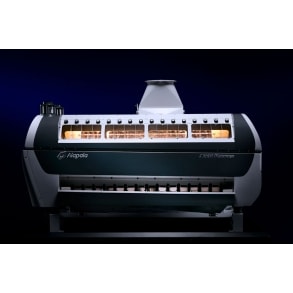
As a member of the new generation of milling machinery which have evolved over the past 60 years its innovative design and durable construction makes it a highly reliable, efficient and powerful machine for the purification and classification of the semolina in the flour, durum and maize mills.

The exhaust or suction chamber consists of two aerodynamically designed chambers with independent regulation valves above the sieves for optimum adjustment of air flow passing through the sieves. The exhaust is fitted with an adjustable butterfly valve. The machine satisfies most of the hygiene standards as all parts in contact with the product are made of high quality materials for the best sanitation. Efficiency is obtained by using top quality vibratory motors and vibration mountings which are maintenance free and energy efficient.

The ARION satisfies all safety standards.

Working Principle

The flow rate of the product is adjusted by a gate which provides a perfect distribution of the product along the entire width of the sieves. The ideal vacuum along the sieve surface is obtained by an aerodynamic air canal with regulating valves. This keeps the bran and other light fractions suspended and taken to the discharge and collecting boxes below. The semolina and bran are separated by the sifting action of the sieves. The cleaning of the sieves is done by brushes.

0.00 KZT

A perfect evolution of milling technology.

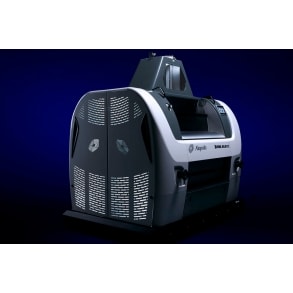
The new SIMILAGO II is the result of ALAPALA’s 60 years of experience in the milling technology and engineering of roller mills and the complete range of milling machinery. The SIMILAGO II is designed for high, continuous and consistent grinding of cereals such as wheat, maize (corn), rye, spelt, barley and sorghum. A uniform feed rate across the grinding rolls ensures a consistent grind.

Structure

Structurally, the SIMILAGO II has a sturdy frame which is a desk type, precision machined by using the most modern CNC machines. The steel used is a special quality high carbon steel. The bearings and the grinding rolls are directly mounted on to the frame. This sturdy construction gives the SIMILAGO II the ability to perform high capacity grinding with continuous operation without effecting its performance and reliability day in and day out . The internal product contact parts are made from stainless steel which also stop the adhering and accumulation of the product and condensation. The SIMILAGO II is silent in running due to the special profiled transmission belt, drive pulleys and tensioning pulleys which differentially drive the rolls. No greasing is required which provides a clean environment. Roll temperature is kept low by the air circulation provided by the aero dynamic design of chamber structure.
Easy and fast change of the rolls can be performed in 20 minutes, which is a significant reduction in down times. No special tools are required as the standard tools can be used. No lifting devices for the roll sets are required as they can be dismounted directly from the machine onto a cart. The grinding rolls are mounted on self-aligning double row roller bearings which are housed in 25 mm thickness housing. For inspection purposes, double walled inspection door (Alapala design) which can be opened and closed easily due to a weight system avoiding the use of latches. This enables the doors to be dismounted / mounted to from the machine without the use of fasteners. The universal frame of the SIMILAGO II allows the use of grinding rolls with either a diameter of 250 mm or 300 mm.

Working Principle

The feed roll speed is controlled automatically by the capacitance sensor in the feed box which sends a signal to feed roll drive motor invertor via a PLC according to the product level in the feed box. No calibration is required. This ensures a perfect and uniform product feed to the grinding rolls. The polycarbonate inspection glass on the feed box can be easily removed from the outside without the need to dismantle the feed spouts and related parts, for cleaning. The SIMILAGO II complies with the sanitation standards. Opportunity for maximum cleaning and hygiene in a few minutes by setting lower chamber of feeding system rollers to fully open position with only a single operation.


0.00 KZT

Water filtration systems are available on one frame with a steam generator:

  • Softener (activated carbon)
  • Chemical reagent dosing systems for water treatment
  • Reverse osmosis

Made of AISI 304 stainless steel

0.00 KZT