Find

Main | Find

Find

It is used to bag the granular and processed products in 10 kg, 25 kg, and 50 kg PP bags at high capacities.

Working Principle

The weighing process is made by one or two weighing units, which are isntalled on weighing machine. The machine would have 4 (four) or 6 (six) spouts per capacity. During weighing process, the weighing unit holds the sack and waits till a warning comes from “hold switch” and do not open the covers. When a warning arrives the product is allowed to run and filling process is carried out. When the spout platform turns the new free spout arrives at weighing station while the filled bags arriving shaking station for proper handling, meanwhile the operator places an empty sack on the free spout and the filled sack is sewn consequently on the sewing band conveyor. The speed of machine is regulated in accordance with product and the length of sack.

0.00 KZT

It is used to bag the granular and processed products in 10 kg, 25 kg, and 50 kg PP bags at high capacities.

Working Principle

The weighing process is made by one or two weighing units which are installed with. After the weighing process is carried out the weighing unit will not open the covers and wait till a warning received from bag holding switch. Once communication received the covers will be opened and the weighed flour will be discharged into the sack. Once the filing is carried out, the sack is conveyed onto band conveyor and its mouth automatically is sewn. The machine speed is adjusted in accordance with sort of the product and size of the sack. The band conveyor is 3 meter long as standard.
The extra length can be supplied per client requirement or project need. The automatic or semi automatic thread cutting sewing machine is installed on a column integrated with the band conveyor. All operations of the machine are controlled by PLC programme. The values are received trough load cells are evaluated by an advanced weighing module. Weighing, discharge, sack holding - release, and so on processes are completely electronic and managed a supervision program. All vibrations are caused by external tractors and filtrated and amortized by a software program. All pneumatic equipment does not need any lubrication.

0.00 KZT

Among the most important factors letting us reach the peak are our organization that can support the weight of the concept - trust - in flour and feed machinery industries and also our high - quality services. Electricity project drawings of low-tension and compensation systems of flour and feed mills; designing and manufacturing of MCC panels; designing and manufacturing of compensation panels; PCL programming and SCADA software; assembly and connection of field cable trays; computer troubleshooting and program installations; set-up and provision, assembly and test of electric and electronic equipment of all manufactured machinery; repair, maintenance and upkeep of atelier electrical faults (such as hand tools, energy transmission lines, CNS and other machine tools etc.), forming only the small part of tasks assumed by our automation unit, provide continuance in manufacturing facilities.

Main Application

  • PLC controlled machine panels,
  • Industrial automation panels,
  • PLC and HMI programming, software, design and commissioning services,
  • Machine revision procedures,
  • Machine automation systems,
  • Machine production-monitoring automation,
  • Servo and step motor integration,
  • Operations on machine production and increasing efficiency,
  • Energy monitoring and control automation,
  • Potential problems are eliminated early in the preliminary design phase by understanding the requirements of the customers, creating quality solutions with optimum costs for these requirements and then designing and detailing these solutions
  • Our installation and commissioning team, which consists of expert specialists in their disciplines, make it possible for the customers to start production as soon as possible by performing exact installation and commissioning of the projects in a shortest time.
  • Performing electronic installation of MCC panels, compensation panels, machine PLC panels and various types of distribution panels, our firm proceeds its way with the quality of materials used in the project and its experienced staff in the application process.

Company Identification

  • ALAPALA Automation Department projects automation system applications of flour, feed factory machines in line with today’s conditions and implements, and installs the same on turnkey basis.
    The department works on designing a machine that needs revision in accordance with current conditions, increasing efficiency in production and improving the facilities

Главные направления деятельности

Production and Commissioning

  • Control equipment and PLC systems took over the production task of humans in the realization of automation processes, it has now become possible to perform, control, monitor and plan the same work faster with lower operational costs and lower investments.
  • Designs of PLC control and MCC panels that will be used in the automation system are projected in accordance with the facility area and its environmental conditions in which the project is carried out and electrical projects are drawn in EPLAN at the firm

Types of panels manufactured by our company mainly include the following:

  • Machine and system automation panels
  • MCC (Motor Control) panels
  • PLC and DCS
  • Compensation panels
  • Command and control panels

Производство и ввод в эксплуатацию

Design to Commisioning Phases

Our design to commissioning phases consists of the following stages in line with the customer demands and system requirements:

  • Project design
  • Proper product selection
  • Manufacturing and installation
  • Quality control
  • On-site control
  • Supervision and commissioning
  • All of our panels are manufactured in accordance with the specifications and brand preferences provided by the customer.
  • All electrical projects including harnesses, terminal marking operations and harness plans that enable easy intervention in our systems are delivered to our customers.
  • PLC and SCADA programming services that are developed by our expert technical staff enable to operate the system at optimum level.
  • In our turnkey projects and undertakings, trainings and technical support services are also provided to the customers to make sure that the systems operate smoothly.
0.00 KZT

It is used to unstuck the humid and greasy flour which come from the filter and the bran finisher.

The machine is constituted of:

  • Structure of electro-weld sheet rests on support with rubber shock absorber,
  • Group of unstuck constituted with a rotor supported by two line of bearing and equipped with radial adjustable five beaters,
  • Coat whit very resistant nylon sleeve, rests on easily dismantle metallic case,
  • Belt gear motor,
  • Transparent inlet pipe

Working Principle

The product is thrown towards the nylon screen by means of a wing - fitted rotor, which is rotated vertically; consequently the centrifugal force dry the flour. The flour passed through the sieve flow out through the wall of the machine.

0.00 KZT

It is used to feed regularly the granular or powdery product into a conveying line or a machine at a suitable rate. For the collection of flours recovered from the filter, to feed respective pneumatic line.

Structure

  • Vibrating channel made of steel, with transparent cover, connected by elastic clamps to the storage bin and to the discharge piping
  • Adjustable inclination valve for product measuring
  • Vibrator motor with adjustable mass to change the oscillation
  • Cylindrical bin made of sheet metal complete with inspection plexiglass door and supporting framework

Working Principle

The product, which is transferred from the top hopper to a vibrator feeder, is fed into a conveying element or the machine. The power unit (by a vibrator-motor) is used to obtain the required feeding by vibrating.

0.00 KZT

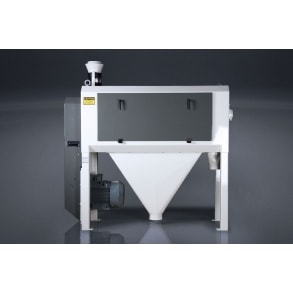
It is used in the flour mills to separate any foreign material may be mixed into final product during milling process or storage. The foreign materials separated from product before packing, product storage or bulk loading silo.

At food processing industry; Flour mills • Semolina mills

Working Principle

The product is conveyed into a cylindrical formed perforated sieve and than it is thrown on the sieve wall with a high speed by means of angular blades which are installed on the rotor. When the product is thrown on the perforated sieve on the flour passes through the holes and it is conveyed to flour chamber and passes through the bunker than directed to discharge and bigger size of foreign material will be conveyed to discharging outlet through the internal chamber. hose size is selected beforehand. During the screening process, flour passes through the screen and larger sizes of bran are directed to the discharge outlet.

0.00 KZT

It is used to discharge stored bulk bran and similar product from storage bins, concrete, steel and plastics silos and provides smooth operation.

Working Principle

By using numbers of articulated brackets freely suspended a pan-like bottom section is oscillated by means of a vibrator. The product flow is regulated by suitable inserts, which are fixed on discharger for an ideal downward flow of the bulk bran, which is stored in the bin.

0.00 KZT

It is used to grind and crush the grain in the cereal processing plants. It is designed to obtain flour and semolina in the flour and semolina mills by processing cleaned grain.

Structure

This machine consists of three main parts. Two sieve boxes and a central framework containing the drive unit. These parts are assembled by means of screws and transversal beams. It is possible to separate the machine into three main parts for an easy make handling, shipping and hoisting to the installation floor.

  • 2 pieces symmetrically designed sieve boxes
  • 1 piece drive housing
  • 2 pieces carrier arms
  • 1 set of suspension group including suspension rods

The inner framework comprises all the parts dealing with the machine motion, in particular, the electrical motor, shaft and the counterweight mass. The whole shaft - counterweight unit is bedded by double ball bearings. The drive unit is easily accessible by removing the large side panels covering the central framework

Working Principle

The product comes from above through one or two inlets and is sifted in the sieve nest, this operation being due to rotary motion of the machine and gravity. In this way from 5 (five) to 7 (seven) selections (sorts of product) with different granules can be obtained at the horizontally divided passages and 12 (twelve) selections at the vertically divided passages. A special device fitted at the inlet of channels provides a very precise separation of the product load along the entire width of the upper sieves for a remarkable increasing of the sifting of the single passage. The great numbers of superimposed sieves and their square shape also guarantee an effective sifting action and a precise classification of the products, positively affecting the final grinding yield. Each machine is completed with its own product inlet and outlet boards, the discharge control spouts and the connection sleeves made of fabric permeable to the air. The machine is easy in maintenance for it’s quite an easy matter to install and dismantle and insert the telero frames into the boxes. The special and even structures of sifters do not allow insects and moths to shelter.

0.00 KZT

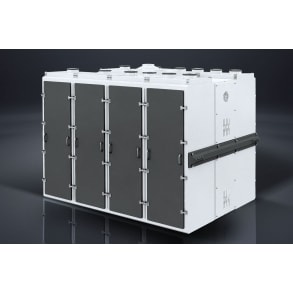
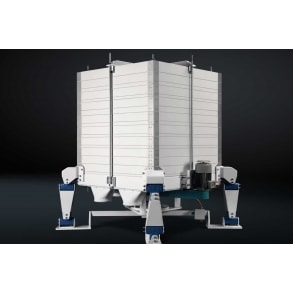
The square sifter offers many advantages for sifting processes at high capacities. It provides large sifting area in very limited space. The maximum sifting area can be obtained by using different types of boxes. It is used to sift the broken and floury products and classify different kinds of grains.

Structure

This machine consists of three main parts. Two sieve boxes and a central framework containing the drive unit. These parts are assembled by means of screws and transversal beams. It is possible to separate the machine into three main parts for an easy make handling, shipping and hoisting to the installation floor. * 2 pieces symmetrically designed sieve boxes * 1 piece drive housing * 2 pieces carrier arms * 1 set of suspension group including suspension rods The inner framework comprises all the parts dealing with the machine motion, in particular, the electrical motor, shaft and the counterweight mass. The whole shaft - counterweight unit is bedded by double ball bearings. The drive unit is easily accessible by removing the large side panels covering the central framework.

Working Principle

The product comes from above through one or two inlets and is sifted in the sieve nest, this operation being due to rotary motion of the machine and gravity. In this way from 5 (five) to 7 (seven) selections (sorts of product) with different granules can be obtained at the horizontally divided passages and 12 (twelve) selections at the vertically divided passages. A special device fitted at the inlet of channels provides a very precise separation of the product load along the entire width of the upper sieves for a remarkable increasing of the sifting of the single passage. The great numbers of superimposed sieves and their square shape also guarantee an effective sifting action and a precise classification of the products, positively affecting the final grinding yield. Each machine is completed with its own product inlet and outlet boards, the discharge control spouts and the connection sleeves made of fabric permeable to the air. The machine is easy in maintenance for it’s quite an easy matter to install and dismantle and insert the telero frames into the boxes. The special and even structures of sifters do not allow insects and moths to shelter.

Features & Advantages

  • High sifting capacity can be obtained by using different frame heights and intermediate frames (spacers). In this way, below and above sifting paths can be adjusted.
  • Effective sifting possibility at high capacities. It is possible to increase 22 % sifting area by using “G” type sifter boxes
  • Each sifting cabin can accommodate up to 28 sifters.
  • A special pressure-clamping device provides proper and tight closing of access doors,
  • Two-way product flow,
  • The sieves, square shaped and having an unchangeable structure, are made of first quality stable wood and are completely covered with laminated plastic (Formica),
  • More sifting area is provided by changing the sieve frames position in right angle,
  • Vertical and horizontal dividing possibility of sifting passages at any required level,
  • Easy cleaning and maintenance possibility,
  • Internally coated insulation panels to avoid condensation, if necessary,
  • A large variety of standard and special sieves enable the arrangement of many sifting in order to meet any flow sheet demand.
0.00 KZT

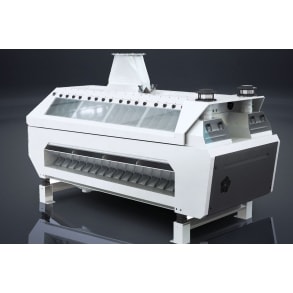
It is designed to enrich and classify semolina in flour and semolina mills.

The purifier comprises three main parts;

  • Fixed main chassis
  • An oscillating body which accommodates the sifting sieves
  • An aspiration channel
  • The exhaust chamber comprises two aerodynamically designed channels with a set of specially designed valves fitted above the sieves for the optimum adjustment of airflow passing through the sieves. The two channels converge at the exhaust intake, which is fitted with an adjustable butterfly valve.

Working Principle

The flow rate of product is adjusted by means of a gate, which provides a perfect distribution of product along all entire width of sieves. The optimum vacuum influence is obtained on the entire surface of sifter by means of aerodynamic air channel and air regulating valves. Bran and similar light materials are kept in suspension due to vacuum influence and transported to discharging channel and collecting box fitted below. The product (semolina) is separated from bran to be classified by means of sieves in accordance with granules.

0.00 KZT

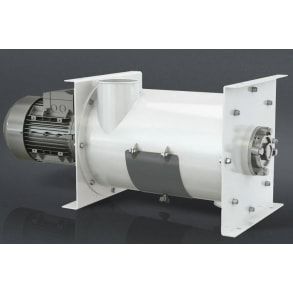
It is used in the flour mills to prevent infestation of insects to be grown in the processed product.

Working Principle

The product is conveyed through center into a blade installed rotor which is at horizontal position. During the rotation movement, the product is thrown to wall of the machine and the grown eggs are destroyed.

0.00 KZT

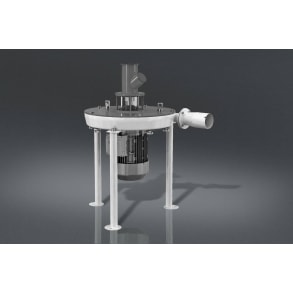
It is used to realize separating and grind process at the semolina passages in the flour diagrams, this process increases the yield of flour and consumes less energy comparing to other grinders.

Working Principle

The product is fed through the center of the machine. Uniform and smooth distribution of product is provided by means of radial wings of the rotating disc. High rotation speed creates a gradually increasing centrifugal force, which throws the product towards the fixed disc’s pins. The impact force depends on the structure of pins. The broken but not ground parts, which come from the passages and stuck on fine and medium size semolina are loosened and separated from each other. Because of free grinding the hard and soft semolina grains are affected differently.Therefore, it causes an automatic grinding between different sized parts. The parts, which are of equal size, are grind by homogeneous breaking quality. So that high flour yield is obtained. The rate of ash almost stays stable or increases slightly which can be neglected. As a result with the high productivity the obtained high flour yield will provide for a shortened flour diagram. The large particles and foreign materials are prevented from getting into the machine by installing a sieve at the inlet of the detacher.

0.00 KZT

It is used to break endosperm flakes, which are obtained after reduction rolls, so that it helps for the process of the flour production.

At flour mills; At coarse and fine semolina passages | After roller mills or before plansifter inlet.

Model DTDA - 35 / 45G This model is designed for higher capacities. Application, design and working principles are similar to those of our regular model DTDA 30/45. Material incoming is different. The cumulated product enters from the side and feeds axially through the machine.

Working Principle

The material (stock) to be detached is fed through the inlet directly to the rotor and is caught by the inner surface of the jacket, which is installed with six impact bars helps increasing the detaching output. The pitch of beaters directs the material from the feeding point to the discharge point of the machine.

Structure

A cylindrical steel body is supported by stands from both sides. The design of supports allows the drum detacher to be installed on the floor or to be suspended from the ceiling. The rotor is outfitted with four beaters. It is bedded at both ends by ball bearings, which are installed outside. The rotor can be driven by direct- coupled or belt-pulley system either from inlet or outlet side.


0.00 KZT

It is used to fill in the gap between the big plansifter and the laboratory plansifter. Therefore, it provides great advantages.The capacity of the plansifter is determined by taking into consideration the kind of application and the grade of silk cloth.

Structure

  • Metallic support to carry the frame
  • Leakage-proof frame, fixed on the metallic support
  • Bottom frame with several outlet
  • Rotation leg
  • The sieve flow schema, numbers of sieves can be adjusted to meet special requirements

Working Principle

Vibrating process is maintained by means of vibro-motors, which are placed in the center of gravity of the machine. The grain feeding chamber and body which are mounted on the rubber shock absorbers by vibrating together and driven by vibro-motors convey the product into midsection of inlet. The grain is separated uniformly on the entire surface of the screen by means of an adjustable regulating gate.

0.00 KZT

Machine, which uses a centrifugal action to gently separate the floury endosperm, attached to the bran, thus reducing to the minimum the starch content of offal and ensuring high flour yield.

Structure

  • Screw for product introduction with centrifugal disc
  • Welded sheet structure
  • Statically balanced rotor fitted with four beaters, each with adjustable angle and distance to the cover
  • Shaft mounted on a double row of spherical roller bearings and supports
  • Cover made of perforated sheet steel specially shaped to avoid internal turbulence
  • Adjustable paddles to vary the rate of product flow through the machine
  • Two wide doors permit easy access for inspection and screen removal

Working Principle

The product is thrown towards the screen by means of a wing - fitted rotor, which is rotated horizontally; consequently, the flour and bran are separated from each other. Due to centrifugal force, the product is thrown towards the screen whose size is selected beforehand. During the screening process, flour passes through the screen and larger sizes of bran are directed to the discharge outlet.

0.00 KZT